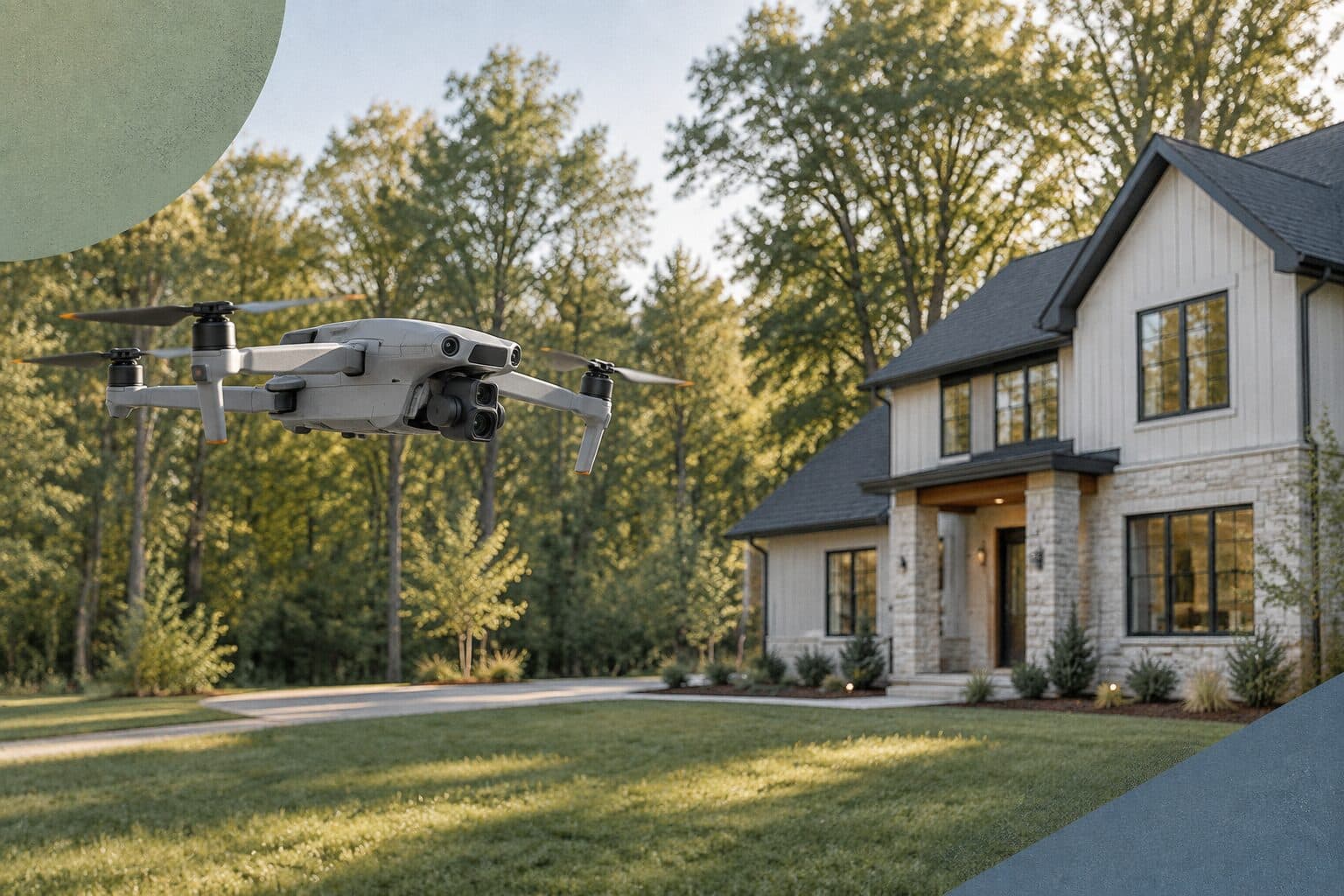
Drone photos and video are useful when the thing you need to show is too big or too spread out for a camera on the ground, like a new home and its lot, a piece of land, a facility, or a building going up. They work best when the shoot is planned around where the images will be used, with a pilot the FAA has certified for commercial work. Here's where aerial images help, what to decide before the shoot, what the rules mean for your schedule, and what to ask before you hire someone.
What are drone photos and video good for in a business?
A drone is the right camera when the size, the layout, or the setting of a place is what you want people to see. These are the most common business uses.
- New homes and construction. An aerial shows the house, the lot, and the street around it in one frame, which a ground photo can't do. This is the kind of work we did for Engelsma Homes, where we shot drone aerial photos of their homes.
- Property and land. For a parcel, a farm, or a commercial lot that's for sale or lease, a view from above shows the shape of the property, how you get to it, and what's around it.
- Facilities and campuses. A plant, a warehouse, or a school with several buildings is hard to explain from the ground. One aerial shows how the buildings, parking, and entrances fit together.
- Progress over time. Flying from the same positions on a regular schedule during a build gives you a record of the project and a set of before and after images when it's finished.
- Website and ad imagery. A wide aerial works well as the header image on a home page or service page, and short aerial clips can run as background video or as part of a longer promotional video.
When a ground camera is the better choice
If the point of the photo is detail, a camera on the ground does a better job than a drone. That covers a lot of what businesses need.
- Interiors, finishes, and craftsmanship
- Products and anything else shot up close
- Staff, team, and customer photos
- A storefront where the front of the building matters more than the roof
Most property and project shoots use both. The aerials show the setting and how the site is laid out, and the ground photos show what it's like up close. Planning them as one shoot is simpler than booking two, because the travel and setup happen once and both sets are taken in the same light.
Start with where the images will be used
Where the photos and video end up decides which shots to take and how to frame them, so settle that first. Our own planning starts with the same question: where the photos or video will be used and what they need to show.
- Website. A home page header is wide and often has text laid over it, so the shot needs open sky or plain ground on one side where the words can go.
- Ads. Google's ad formats commonly use both a wide and a square version of the same image, so the subject needs room around it for either crop.
- Social media. Vertical clips need to be planned before the flight, because cutting a vertical clip out of a wide one leaves only a narrow strip of the original frame.
- Print. Brochures, mailers, and signs need full-size still photos. A frame pulled from video usually has less detail than a still from the same camera.
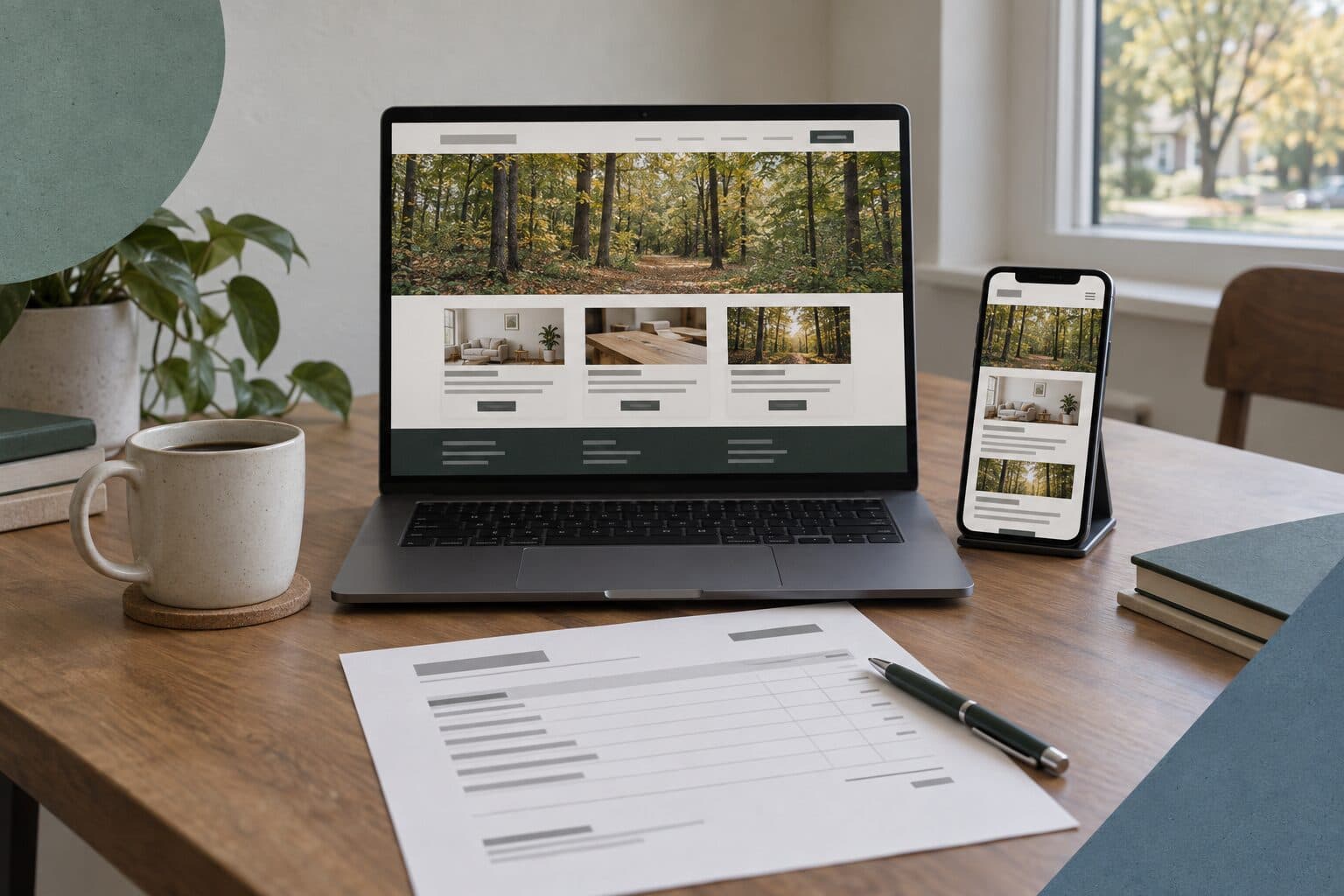
If the images are going on a new website, plan the shoot alongside the build, because who provides the photos is one of the things that affects what a website costs. If they're going into ads, ask whoever manages the account which image sizes the campaigns use before the shoot. If nobody does yet, our post on Google Ads management explains what that work involves.
What should you plan before a drone shoot?
Once you know where the images are going, a few practical choices decide how the day goes.
Light and time of day
Low sun in the morning or late afternoon gives softer light and longer shadows, which show the shape of buildings and land. Light from high overhead in the middle of the day tends to look flat. The side of the building you most want to show should be lit by the sun, so a building that faces east is usually shot in the morning and one that faces west in the afternoon.
Weather and season
Wind, rain, and snow can cancel a flight, so settle on a backup date when you book. Season matters too. In Michigan, and anywhere else with four seasons, the same property looks very different in summer, fall, and winter. Green grass and full trees suit most marketing images, bare trees show more of a site's layout, and snow hides landscaping. A website photo can stay up for a long time, so shoot in the season you want people to picture.
Site access and permission
The pilot needs a safe place to take off and land, and permission from whoever owns or manages the property. On a job site, that means clearing it with the site supervisor and letting the crew know when the drone will be up. It also helps to walk the site the day before and look at what will be in the frame. Anything left on the lot shows from above, so move trucks, dumpsters, and loose material out of the way if you can.
Stills, video, or both
Decide whether you need photos, video, or both before the day, because they're flown differently. Stills are taken from set positions, and video needs slow, planned moves. Both can come from the same visit, but only if the plan leaves time for each.
What you get at the end
Agree on the files before the shoot: how many edited photos, how long the video is, which sizes and shapes, and whether you also get the unedited originals. We deliver finished files edited and sized for where you plan to use them, and the unedited originals if you want them. It's fair to ask the same of anyone you hire.
Each of these choices changes the size of the job. The number of locations and visits, whether you need video and how much editing, and how far the site is all affect the quote, so it helps to settle them before you ask for one. Our FAQ explains why we don't list prices.
How to plan progress photos of a construction project
Progress photos are only useful if each set can be compared with the last one, so the plan is mostly about repeating the same shots.
- Pick a few fixed positions at the start, and note the height and direction of each one.
- Fly at about the same time of day on each visit, so the light and shadows match.
- Tie visits to stages of the build, like site work, foundation, framing, roof, and completion, or set a regular schedule and keep to it.
- Name and file each set the same way every time, so anyone can find the visit they need.
- Plan the final visit with extra care. It's the set you'll use most, so fly it in good light after the site is cleaned up.
Done this way, you end up with a record of the job for the owner and your team, and before and after images for your website and project gallery once it's finished.
What FAA rules apply to a business drone shoot?
In the United States, a business drone flight needs a pilot who holds a Remote Pilot Certificate from the FAA, often called a Part 107 certificate after the rule that covers it. That includes a photographer you hire. The pilot is responsible for following the rules, but a few of them affect your schedule and your shot list, so it helps to know them.
- The drone has to be registered with the FAA, and in most places it has to broadcast Remote ID, which sends out the drone's identification and location while it flies.
- Near an airport, the pilot needs FAA authorization to fly in controlled airspace. Often that comes through the FAA's LAANC system in near real time, but some requests have to be reviewed first and take longer, so share the address early.
- Temporary flight restrictions can close airspace for a limited time, for example around certain major sporting events or emergencies. The pilot checks for them before flying.
- Flying over people who aren't part of the operation is limited. On a busy site or during business hours, that can change the flight path or the time of the shoot.
- Flying after sunset requires anti-collision lighting on the drone. If you want an evening shot with the building's lights on, ask about it when you book.
- The pilot has to keep the certificate current with online recurrent training every 24 calendar months and have it on hand while flying.
The FAA updates these rules from time to time, and its website has the current version. A pilot who flies for businesses regularly will know them and should be able to explain what your location needs.
Questions to ask a drone pilot before you hire one
- Do you hold a current FAA Remote Pilot Certificate, and can I see it?
- Is my site in controlled airspace, and how far ahead do you need to request authorization?
- Do you carry liability insurance that covers commercial drone flights, and can you send proof?
- Can I see aerial photos or video you've shot of a property or project like mine?
- Will you shoot stills, video, or both, and which sizes and formats will you deliver?
- Do I get the unedited files too, and can I use the images anywhere, including ads and print?
- What happens if the weather is bad on the day of the shoot?
- For progress work, how will you repeat the same shots on each visit?
Our drone pilot holds a current FAA Remote Pilot Certificate, and we carry liability insurance that covers commercial drone flights. Our video and photo page covers the drone, video, and photo shoots we do, and our work page has past projects. If you have a property or project in mind, send us a few details and we'll plan the shoot with you.